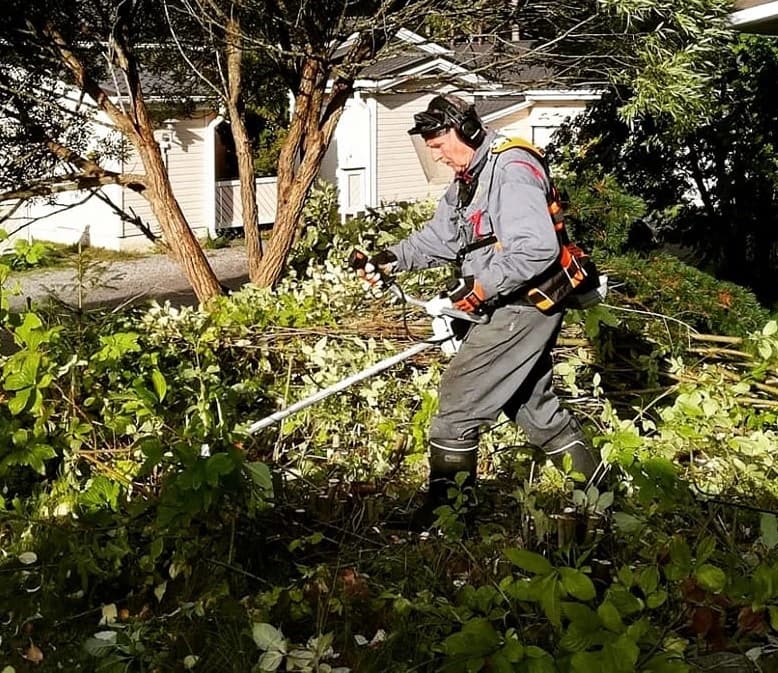
Etsimme remonttitaitoisia tai kiinteistöhuollon osaajia Hämeenlinnan seudulle!
3 min. read
Hämeenlinnassa keikkatöitä tarjolla
Read article
By AgeIn team
3 min. read
Societies across Europe and globally face a dual demographic and economic crisis: an aging population vulnerable to isolation, alongside vulnerable groups - displaced persons, immigrants, and veterans - who have fallen outside standard economic routines. Conventional public interventions respond reactively, with medical care or basic aid, but the evidence points to the root cause lying upstream, in the Social Determinants of Health: purpose, connection, and income.
The AgeIn model is validated to move both. Structured, autonomy-driven engagement delivers measurable improvements across physical, cognitive, and mental health - and it does so by putting money directly into the hands of the people it serves. In our experimental study phase, 65+ Experts delivered 65,000 hours of work to paying customers, generating €1.5 million in lifetime revenue. Of every euro earned, 75% - €1.125 million - flowed to the 65+ workforce: €787,000 as wages for completed tasks and €337,000 as the statutory pension and social contributions attached to those jobs. Only 25% was retained by AgeIn to run the venture.
This is not aid - it is trade. Customers pay market rates for real work, and three of every four euros become earned income and long-term economic security for older adults. By connecting individuals to purposeful participation, community Guilds, and paid flexible work, the model attacks poverty and social exclusion at their source: it converts the demand for meaningful engagement into wages, pensions, and economic resilience.
Wellbeing scores show the intervention works; the payment trail shows it reduces poverty. In AgeIn's experimental Onnexi study phase, 65+ Experts delivered 65,000 hours of service to paying customers, generating €1.5 million in lifetime revenue only in Finland. Almost none of it stayed with us. Of every euro earned:
52.5% (€787,000) went directly to 65+ Experts as salaries for tasks customers paid for - income in their own hands.
22.5% (€337,000) covered the statutory employee costs attached to those salaries - pension contributions and social funds - building their long-term economic security.
25% (€375,000) was retained by AgeIn to run and grow the venture.
In other words, 75% of cumulative revenue flowed to the 65+ economy - wages and pensions - while only a quarter stayed with AgeIn. This is not a subsidised wellbeing programme: customers paid market rates for the work, so the poverty reduction is earned income, delivered by trade rather than aid. Each grant euro buys distribution; every euro of revenue that follows sends roughly 75 cents to the 65+ workforce.
Traditional social activation programs often fail to produce durable health outcomes because they treat activity merely as a binary box to check. Our multi-method clinical validation - conducted across quantitative surveys (WHO-5 Wellbeing Index, SWB-10, CASP-12), in-depth physician interviews, and comparative EU datasets (easySHARE Wave 9 across 28 countries) - revealed a decisive pattern: activity alone does not significantly predict wellbeing.
Health and quality-of-life outcomes emerge only when engagement is grounded in Self-Determination Theory (SDT) by fulfilling three fundamental psychological needs:
Autonomy: Total flexibility over task type, timing, and intensity, shifting the mindset from obligation to self-directed choice.
Competence: The ability to utilize lifelong professional expertise, master new tools, and see tangible impact.
Relatedness: Authentic human connection through peer collaboration, Guild networks, and intergenerational support.
When these three needs are satisfied, structured engagement acts as a potent preventive health intervention.
The empirical data collected from active participants highlights statistically significant gains across multiple clinical domains:
Reduced Healthcare Utilization: Analysis shows an approximate 20% reduction in annual physician visits among active participants compared to non-active peers (decreasing from an average of 3.9 visits to 3.1 visits per year). This presents an immediate economic dividend for healthcare systems and payers.
Physical Health and Chronic Disease Management: Regular participation establishes a natural circadian rhythm. Participants report marked improvements in sleep quality and daytime alertness, better weight regulation, and blood pressure reductions. Furthermore, 80% of active members engage in regular physical exercise compared to just 47% in control groups (𝑝 = 0.028).
Cognitive Vitality & Delaying Decline: Engaging in structured tasks and digital collaboration revitalizes IT and problem-solving skills, builds cognitive reserve, and enhances concentration and memory retention.
Mental Wellbeing & Combating Isolation: Participants report high life satisfaction (averaging 8/10) and robust WHO-5 wellbeing scores. Notably, nearly 80% of observed health benefits are directly mediated by the social networks and Guild ties formed on the platform.
"Flexible, low-intensity engagement (equivalent to 1–3 days per week, 4–6 hours per day) provides rhythm and purpose without the fatigue of rigid employment, creating a sustainable model for healthy longevity."
The qualitative evidence reinforces the data with human stories of recovery and dignity:
"I sleep significantly better after doing work tasks. Daytime naps are gone, and having a structure keeps me sharp." - Female participant, 66–70
"Blood pressure has decreased and I manage my weight better. Before it was mandatory routine; now it is freedom of choice." - Male participant, 66–70
"Work brings good mood and uplift, but above all social contacts. My spouse suffers from a memory disease; having this purpose and community keeps me sane." - Female participant, 71–75
"It gives a positive meaning to daily life - it feels like I am still needed. The opportunity to contribute is a privilege." - Female participant, 66–70
A unique strength of the AgeIn framework is that it addresses health upstream. Through the lens of the WHO Social Determinants of Health framework, the platform operates across all three systemic layers simultaneously:
Upstream (Socio-Economic Foundation): Generating flexible, micro-income opportunities, activating latent skills, and lowering the risk of late-life or displacement-induced poverty.
Midstream (Empowerment & Agency): Rebuilding autonomy, competence, and peer-to-peer solidarity through localized Guilds.
Downstream (Behavioral & Clinical Outcomes): Restoring sleep routines, mental alertness, physical vitality, and emotional resilience.
This integrated approach makes the model directly applicable not only to retiring seniors seeking healthy longevity, but also to vulnerable groups experiencing sudden disruption - such as internally displaced persons (IDPs), immigrants adapting to new environments, and veterans transitioning into civilian society. In every case, providing a structured pathway to be recognized as a contributor rather than an aid recipient transforms social vulnerability into societal capability.
AgeIn demonstrates that purpose, social connection, and flexible work are measurable determinants of health. By treating experience as an asset and community as an infrastructure, we can simultaneously alleviate the burden on public healthcare budgets, rebuild local economic resilience, and ensure that every individual retains their dignity, agency, and health regardless of age or life transition.
3 min. read
Hämeenlinnassa keikkatöitä tarjolla
Read article
4 min. read
Kassa- ja asiakaspalvelutyöhön osaajia
Read article
3 min. read
Merkityksellistä työtä henkilökohtaisena avustajana
Read article